Proprietary engineering platforms that define our competitive edge: variable-speed compressor systems, next-generation refrigerant compatibility, and intelligent building integration.
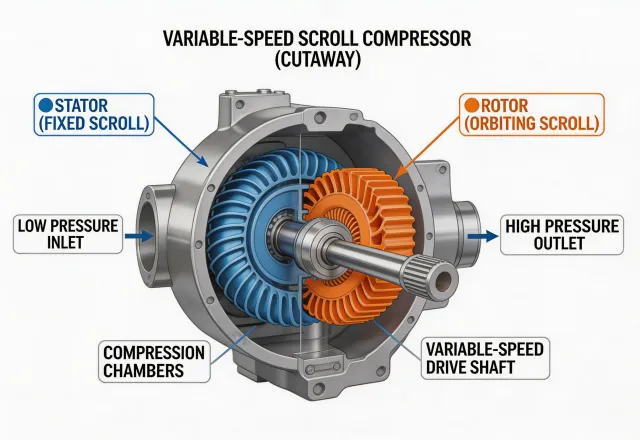
Our inverter-driven compressor platform modulates capacity from 10% to 100%, matching real-time cooling demand with precision. Unlike fixed-speed compressors that cycle on/off, our variable-speed units maintain continuous temperature control while consuming 30-50% less energy at part load.
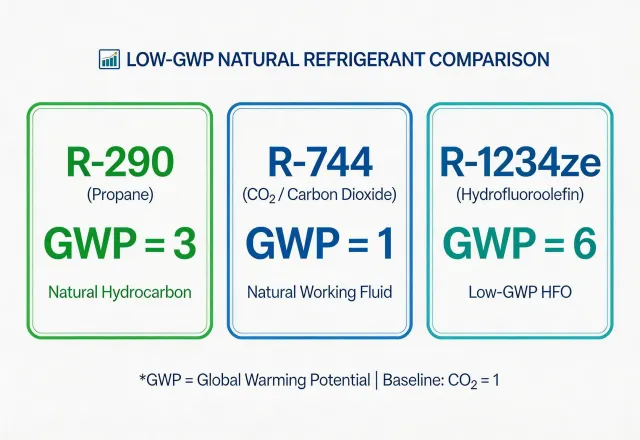
The Kigali Amendment and EU F-Gas Regulation are phasing down high-GWP HFCs globally. TraneThermal has engineered our complete product line for compatibility with three leading low-GWP alternatives:
GWP: 3. Natural refrigerant for small-to-medium charge systems. Excellent thermodynamic properties. A2L/A3 safety classification requires engineered charge limits.
GWP: 1. Ideal for transcritical systems in commercial refrigeration and heat pump applications above 80 degrees C. Zero ODP, non-flammable.
GWP: 7. Synthetic HFO with near drop-in compatibility for existing R-134a systems. Lower flammability risk (A2L), proven in chiller applications from 100 to 2,000 TR.
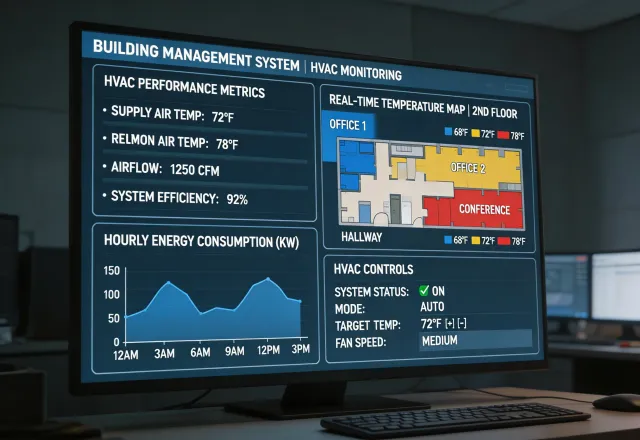
Every TraneThermal system ships with our proprietary control module supporting BACnet MS/TP, BACnet IP, and Modbus RTU/TCP protocols. The platform provides:
The Kigali Amendment and EU F-Gas Regulation (revised 2024) mandate a global HFC phase-down. The industry remains divided on the optimal transition pathway, and TraneThermal supports both routes to give engineers flexibility based on project constraints.
Zero or near-zero GWP with no patent dependencies, resulting in lower long-term operating costs. CO2 transcritical systems are increasingly viable in warmer climates with advances in gas cooler design. Ammonia remains the most energy-efficient option for large industrial installations above 500 kW cooling capacity.
Limitations: R-290 charge limits (typically under 150g per circuit in EN 378 jurisdictions) restrict unit capacity. Ammonia toxicity requires dedicated machine rooms and leak detection infrastructure. CO2 systems operate at pressures up to 120 bar, demanding specialized components and thicker-walled piping.
Near drop-in compatibility with existing R-134a infrastructure reduces retrofit costs by 40-60% compared to natural refrigerant conversions. The A2L safety classification avoids the strict ventilation and charge limit requirements of A3 naturals, enabling faster adoption with existing technician certification.
Limitations: HFOs are patented compounds with higher per-kilogram cost than naturals. Their atmospheric decomposition produces trifluoroacetic acid (TFA), raising long-term environmental questions. GWP of 1-7 is low but not zero, and future regulation tightening could require another transition.
TraneThermal engineers evaluate each project individually, considering charge size limits, local safety codes, ambient conditions, and total cost of ownership over a 20-year lifecycle before recommending a refrigerant pathway.
The choice between air-cooled and water-cooled chiller architectures depends on application scale, water availability, and lifecycle cost priorities. Neither type is universally superior.
| Selection Dimension | Air-Cooled | Water-Cooled |
|---|---|---|
| Full-Load COP | 2.8 - 3.5 | 5.0 - 6.1 |
| Installation Cost (500 TR) | Lower (no cooling tower, piping) | 25-40% higher (tower + condenser water loop) |
| Water Consumption | Zero | 3-5 gallons per minute per 100 TR (evaporative loss) |
| Equipment Lifespan | 15-20 years | 20-30 years |
| Sound Level at 10m | 75-85 dB(A) | 65-75 dB(A) (indoor mechanical room) |
| Optimal Application | Under 300 TR, water-scarce regions, rooftop installations | Above 500 TR, data centers, process cooling with stable loads |
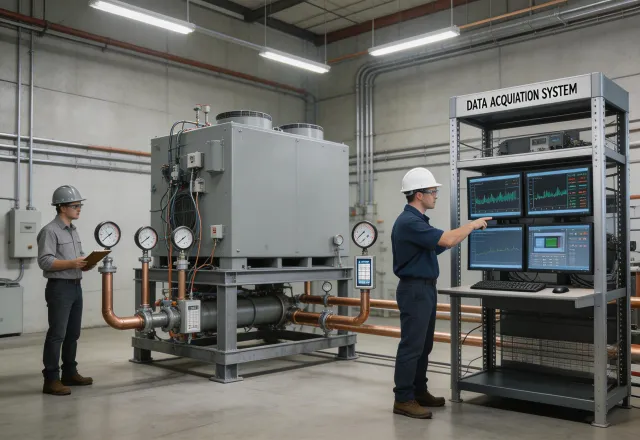
Every TraneThermal chiller and heat pump undergoes full-load and part-load performance testing at our three AHRI-certified laboratories before shipment. Our validation process follows these standards:
Customers may witness factory acceptance testing (FAT) at any of our laboratories. Test reports include measured capacity, input power, COP at 25%, 50%, 75%, and 100% load, refrigerant charge weight, and sound pressure levels at 1 meter distance.
For installed systems, our commissioning engineers perform on-site verification against design conditions, documenting approach temperatures, superheat/subcooling values, and control response times.
Every HVAC system operates within defined boundaries. Understanding these constraints enables proper system selection and avoids field performance issues.
Air-cooled chillers experience capacity derating above 46 degrees C ambient. At 50 degrees C, capacity drops by approximately 15-20% compared to rated conditions at 35 degrees C. For extreme-climate installations, water-cooled systems with cooling towers provide more stable performance.
Variable-speed compressors modulate down to 10% capacity, but sustained operation below 15% load for extended periods can cause oil return issues and reduced lubrication effectiveness. Systems should be sized to avoid chronic underloading.
R-290 systems are limited to approximately 150g charge per refrigerant circuit under EN 378-1. This restricts individual unit capacity to approximately 50 kW cooling, requiring multiple parallel circuits for larger installations, which increases component count and maintenance complexity.
Download detailed engineering data sheets for any product in our portfolio.